Sleeper Squats: How a Hyphen (Almost) Unraveled GitHub's Immutable OIDC Subject Claim
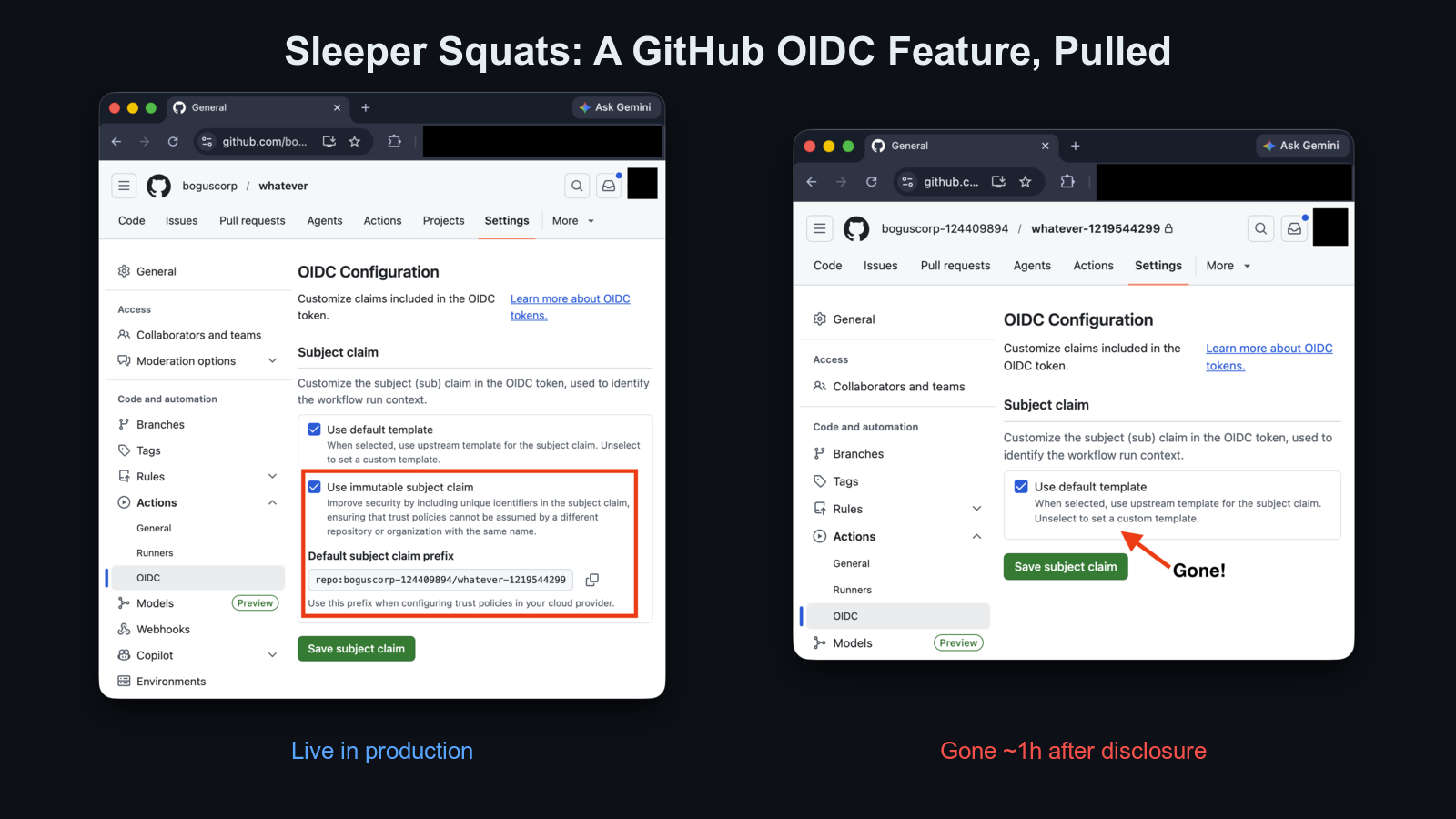
In late April 2026, GitHub shipped a changelog post introducing immutable subject claims for GitHub Actions OIDC tokens, then pulled the post six hours later. The feature stayed live in production into the next day. During that short window, I (and, as I'd learn later, at least one other person) realized the new `<org>-<org_id>` format opens a pre-hijack opportunity: anyone can register a legacy organization whose name is a perfect string collision for a future victim's immutable subject claim, then wait for the victim to opt in. I disclosed via HackerOne the next morning; the feature was disabled in production about an hour later. GitHub later reshipped it with `@` (not a hyphen) as the delimiter, which closes the collision; the namespace-recycling problem it addresses was first disclosed by Tal Skverer in February 2025.

François is the VP of Security Research at Boost Security and co-creator of the poutine Open Source CI/CD scanner. He co-founded the Living Off The Pipeline (LOTP) project to describe the abuse of build tools for lateral movement. After spending years teaching defenders how to secure their workflows, he is now demonstrating how attackers are dismantling them.